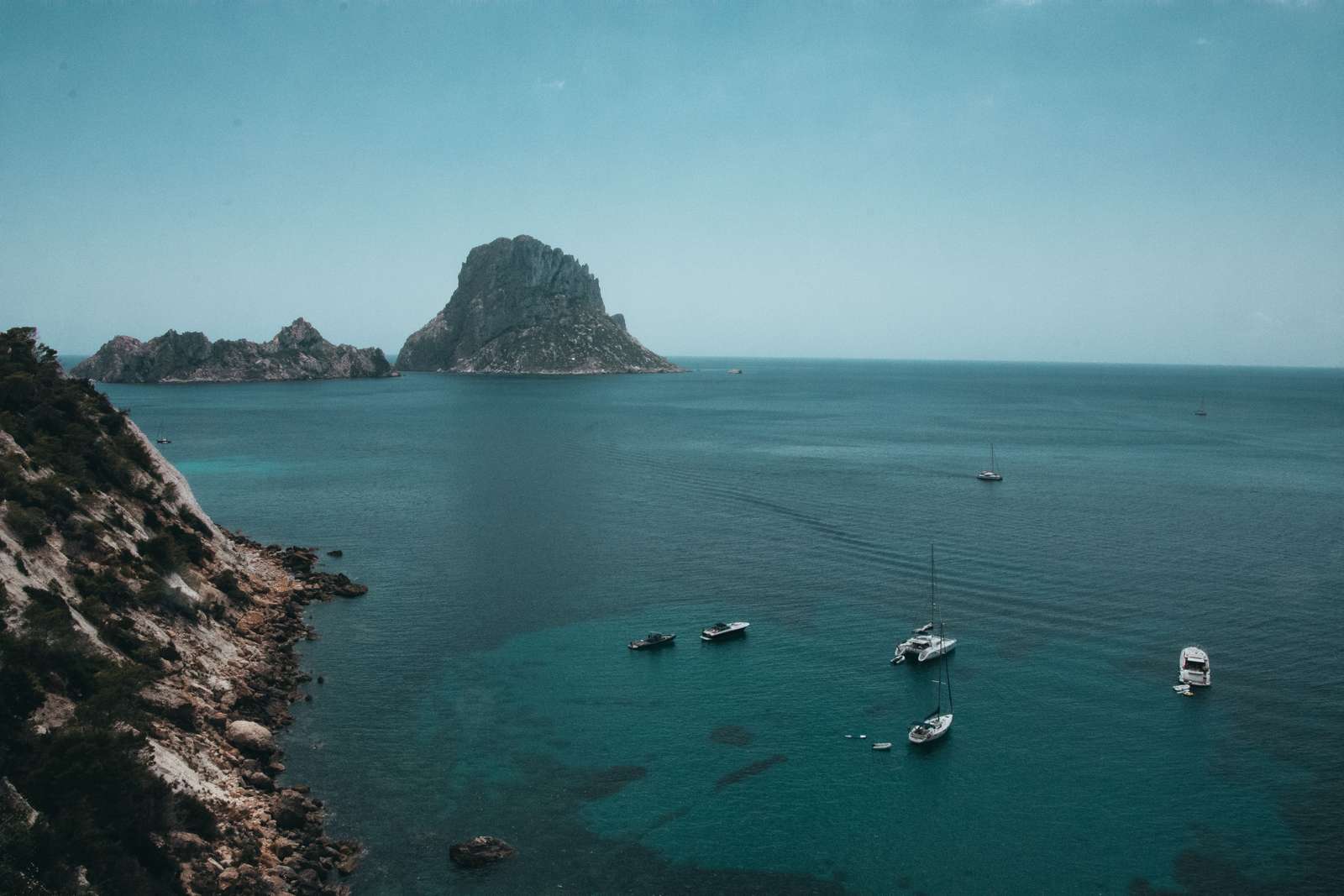
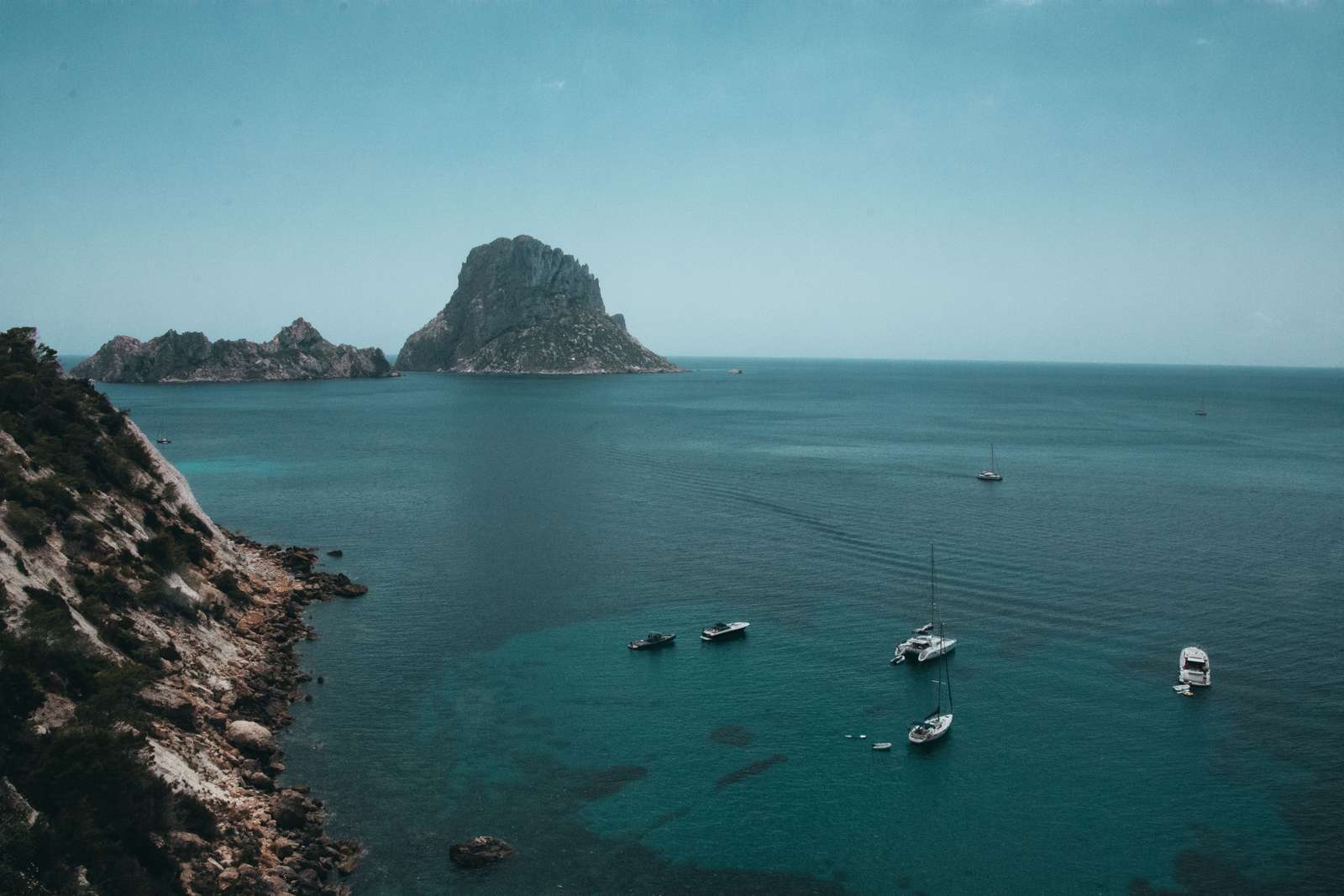
There are few silhouettes in the Mediterranean as instantly recognisable as Es Vedrà. Rising 400 metres straight out of the sea off Ibiza's south-western shore, this sheer limestone monolith has been credited with everything from luring Homer's sirens to bending compass needles. You can admire it from a boat, of course, or through the pines from a beach bar with a glass of cold rosé in hand. But to truly understand its scale - and the wild, dramatically empty coastline that frames it - you need to climb. Two walks in particular deliver the island's most extraordinary views: the long, pine-scented ascent of Sa Talaia, Ibiza's highest point, and the short but exhilarating scramble up to the Torre des Savinar, a crumbling 18th-century watchtower perched on a cliff edge almost directly opposite the rock. Together, they make for one of the great days out in the Balearics.
Why Hike for Es Vedrà at All?
Ibiza's south-west is the island's quiet counterweight to the clubs and beach clubs of the north and east. Here the landscape folds into steep, forested ridges of Aleppo pine, juniper and wild rosemary, dropping abruptly into a cobalt sea. Roads are narrow, development is restrained, and much of the terrain falls within the Cala d'Hort Natural Reserve, which protects Es Vedrà, Es Vedranell and the surrounding islets and marine habitat.
Walking changes your relationship with the view. From a car park, Es Vedrà is a postcard. From a clifftop reached on foot, after twenty sweaty minutes of loose limestone and pine needles, it becomes something else entirely - a mass of rock so close you can hear the gulls wheeling around its flanks, and so vertical that you keep recalibrating its size. Add the elevation of Sa Talaia and you gain the wider context: Formentera floating on the horizon, the geometric pans of the Ses Salines salt flats, and the whole southern half of the island laid out beneath you.
Sa Talaia: The Roof of Ibiza
At 475 metres, Sa Talaiassa - usually shortened to Sa Talaia - is the highest point on Ibiza, and it lends its name to the handsome whitewashed village at its foot, Sant Josep de sa Talaia. The climb is not technical, but it is a proper hike: a steady, shaded ascent through pine forest on stony tracks, with the reward of a genuinely panoramic summit.
Distance and time: roughly 6-8 km round trip depending on your chosen route, allowing 2-3 hours including stops at the top.
Difficulty: moderate. There is around 300 metres of ascent, mostly on wide forestry tracks with some rockier, rutted sections. No scrambling required, but the surface is uneven and loose in places.
Shade: generous on the way up, almost none at the summit.
Trailhead Options
The classic and most satisfying approach starts in Sant Josep village itself, which means you can park in the village, walk from the church square, and finish with lunch or a cold beer without moving the car. Follow the signs from the main road towards the marked path that climbs behind the village; it soon joins a broad track winding up through terraces of almond and carob before entering the pines.
A shorter alternative is to drive part of the way up the paved service road that ascends towards the summit antennas and park where the surface deteriorates, leaving 30-40 minutes of walking. Purists will find this a little anticlimactic, and parking spots are few, but it is a sensible option in heat or with children.
Waymarking is inconsistent, so download an offline map before you set off. Several forestry tracks branch off unhelpfully; as a rule, keep climbing and keep the antennas above you as a reference.
The Summit Panorama
The top of Sa Talaia is not pretty in itself - telecommunications masts and a scattering of concrete keep it firmly unromantic - but the 360-degree view is unmatched. Look south-east and the Ses Salines salt pans glitter in pink and white geometry, with Formentera and the strait of Es Freus beyond. Turn west and the forested ridges tumble to the coast, with Es Vedrà unmistakable in the middle distance, often hazed to a pale blue-grey by the sea air. On a clear winter morning, when the tramontana has scrubbed the sky, you can occasionally make out the mountains of mainland Spain.
Bring a snack and sit for a while. Mornings offer the cleanest air and the best visibility for photography; late afternoon gives warmer colour but more haze.
The Torre des Savinar: Ibiza's Most Famous Viewpoint
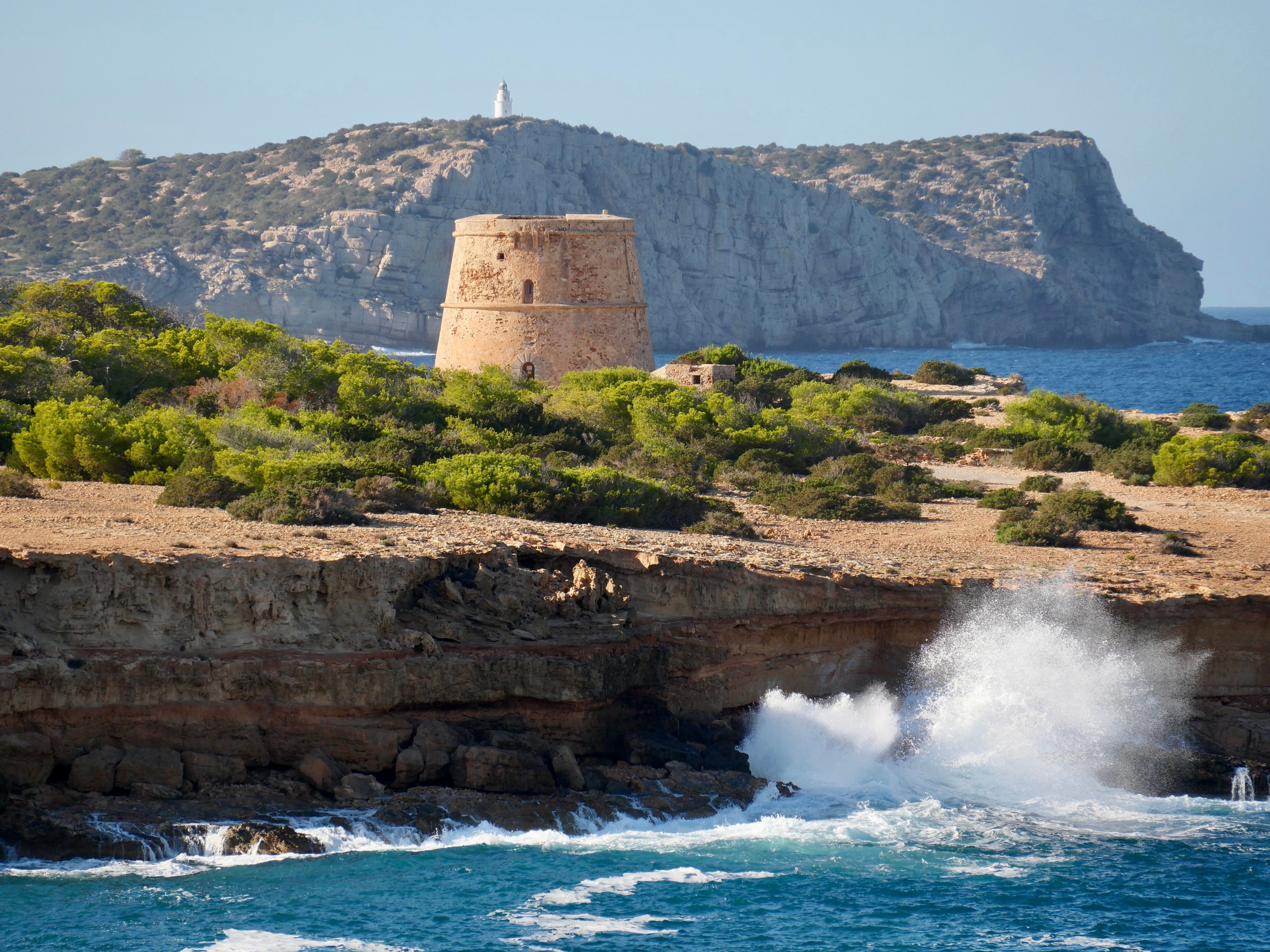
If Sa Talaia gives you the big picture, the Torre des Savinar delivers the close-up. Built in the 18th century as part of the island's coastal defence network against Barbary corsairs, this squat stone tower - widely known as the Torre del Pirata - stands on the cliffs above Cala d'Hort, staring straight out at Es Vedrà and its smaller companion Es Vedranell.
Getting there: from the road between Cala d'Hort and Es Cubells, a signed dirt track leads to an informal car park. Space is very limited, and in summer it fills long before sunset.
Distance and time: short but steep - roughly 20-30 minutes each way, on a rough path of loose stone and bare rock with an eroded, gully-like section near the top.
Difficulty: easy in length, moderate in surface. Trainers with grip are the minimum; walking shoes are better. Not ideal for anyone unsteady on their feet or nervous about exposure.
Shade: effectively none. Do not attempt this at midday in high summer.
The tower itself is a ruin, and while people do climb into and onto it, the stonework is unstable and the drop on the seaward side is fatal. The best views, in any case, are from the natural rock platforms just below and around it. From here Es Vedrà looms with astonishing presence, its striated flanks catching the late light while the sea churns white at its base. Look down and you may spot the pale scar of Sa Pedrera - the so-called Atlantis - on the coast to the north-west.
Sunset, Golden Hour and Photography
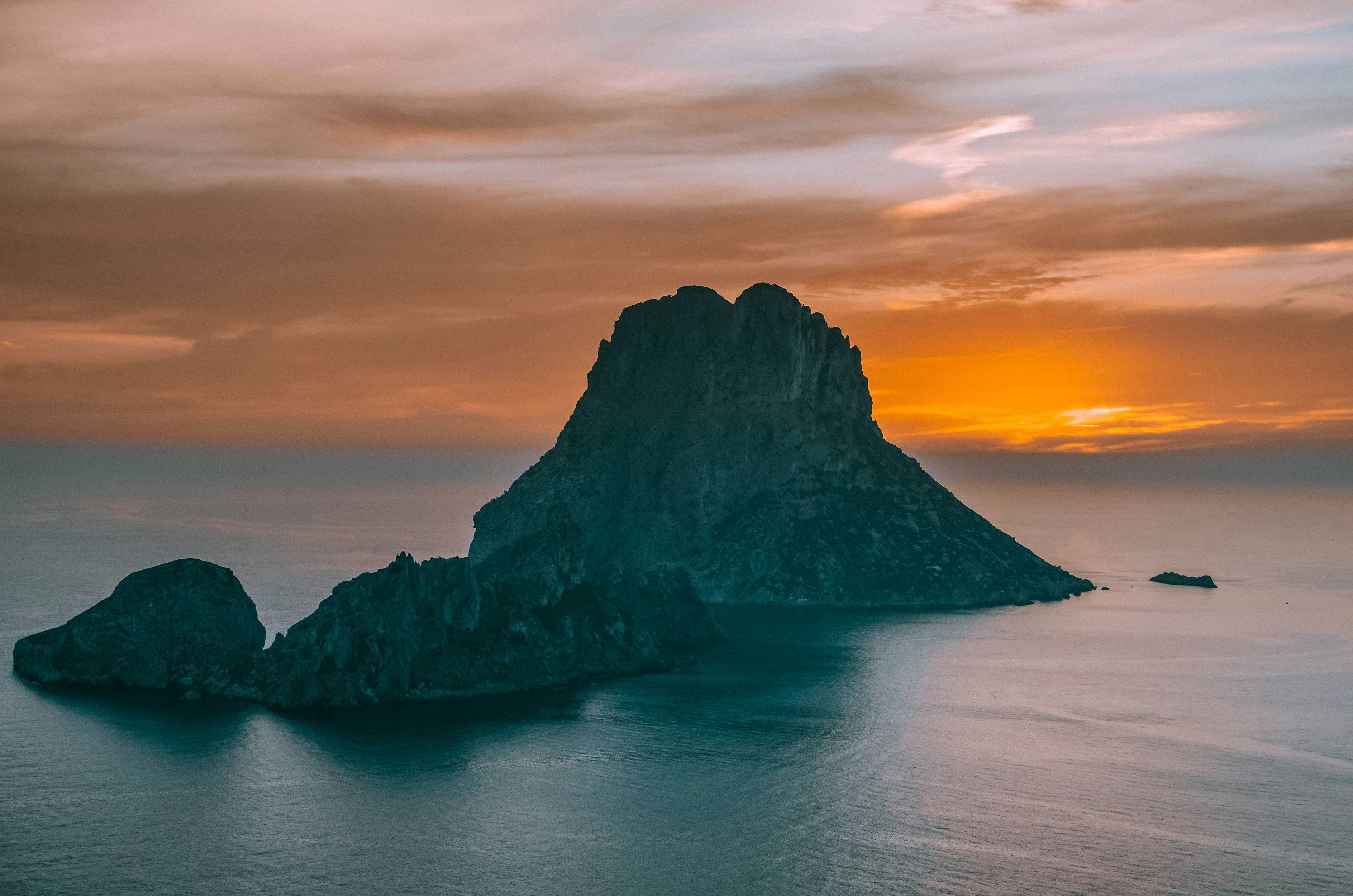
These are west-facing cliffs, which makes them among the finest sunset positions in the Mediterranean - and explains why the Torre des Savinar has become something of a pilgrimage site. A few things worth knowing before you join the congregation:
- Arrive at least 90 minutes early in summer. Parking, not daylight, is the limiting factor.
- Golden hour is generous here. The rock glows amber and then rose as the sun drops behind it, and the best colour often comes 10-15 minutes after the sun has gone. Don't pack up too soon.
- Bring a headtorch. The descent is loose, steep and genuinely awkward in the dark. Phone torches are not enough.
- Spring and autumn give the best light, with clearer air, softer haze and dramatic cloud. Winter offers the sharpest visibility of all.
- Lenses: a moderate telephoto compresses Es Vedrà into a monumental slab; a wide angle captures the cliffs, pines and sea together. A polariser tames Mediterranean glare beautifully.
On Sa Talaia, meanwhile, sunrise is the underrated option: cool air, empty tracks, and the salt flats catching first light.
Practical Advice Before You Set Off
Footwear: sturdy trainers at minimum, walking shoes ideally. Flip-flops and smooth-soled sandals cause most of the incidents on the Savinar path.
Water: at least 1.5 litres per person for Sa Talaia, a litre for the tower. There are no fountains or kiosks on either route.
Sun protection: hat, high-factor sunscreen, sunglasses. The limestone reflects fiercely.
Timing: avoid 12pm-5pm in July and August. Ibiza's summer heat is compounded by humidity and there is no shade at the viewpoints.
Safety: respect fences, warning signs and cliff edges. The rock is friable and undercut in places, and every year visitors take risks for photographs that are not worth taking.
Parking: extremely limited at the Savinar track and in Sant Josep on market days. Arrive early, park considerately, and never block the dirt tracks used by landowners.
Driving: the road down to Cala d'Hort is narrow, winding and busy in high season, with parking attendants and queues by mid-morning. A scooter or an early start solves most of the problem.
Combining Both Hikes in One Day
The two walks pair beautifully, and the geography makes it easy. A suggested rhythm:
- Early morning: climb Sa Talaia from Sant Josep while the pines are still cool and the air is clear.
- Late morning: descend for coffee or a late breakfast in Sant Josep village.
- Midday: drive down to Cala d'Hort for a swim and a long, unhurried lunch of grilled fish or bullit de peix with Es Vedrà filling the horizon.
- Afternoon: detour to Sa Pedrera de Cala d'Hort, the surreal former sandstone quarry known as Atlantis - a steep, unmarked descent to a cubist landscape of cut rock pools, best attempted with care and good shoes.
- Evening: park at the Savinar track and walk up to the tower for sunset.
If you have time to spare, the cliff-top village of Es Cubells is worth the short drive for its white church, monastery and vertiginous sea views, while Sant Josep's restaurants - from rustic can-style country kitchens to more polished modern Balearic tables - make a fitting finish to the day.
The Myths of Es Vedrà
No rock this striking escapes mythology. Es Vedrà has been variously identified as the island of the sirens who tried to seduce Odysseus in Homer's Odyssey, as the tip of the sunken city of Atlantis, and as one of the planet's most magnetically anomalous points - a claim endlessly repeated and never quite substantiated, though sailors have long traded stories of erratic compasses and strange lights in the waters around it.
The documented history is quieter but no less curious: in the 19th century a Carmelite priest, Father Francesc Palau, retreated to the islet to fast and pray, reporting visions among its cliffs. Today Es Vedrà is uninhabited and protected, home to Eleonora's falcons, seabird colonies and the endemic Ibiza wall lizard, and landing is not permitted. Whatever you believe, the rock has an undeniable atmosphere - most people who sit above it at dusk find themselves talking a little more quietly than usual.
When to Go, and How to Go Lightly
Best months: April to early June and late September to November. Temperatures are comfortable, the light is clean, the almond and wildflower seasons add colour, and the crowds thin dramatically. Winter walking is excellent too - cool, clear and almost solitary - though some restaurants close.
Months to plan around: July and August, when heat, traffic and parking make both routes far less pleasant. If you are here then, walk at dawn or in the last two hours of daylight.
Responsible visiting: this is a protected natural reserve, not a viewing platform. Stick to established paths - shortcuts accelerate erosion on these fragile limestone slopes. Take all litter home, including fruit peel and cigarette ends. Fire risk in the pine forest is severe from spring to autumn, so no smoking, stoves or barbecues. Keep noise down, give wildlife space, don't fly drones over the reserve's seabird colonies, and leave the ruined tower exactly as you found it.
Do that, and you'll come away with the best of Ibiza: not the island of the headlines, but a wilder, older place of pine ridges, empty cliffs and one impossible rock standing sentinel in the sea.
Explore luxury villas in Ibiza