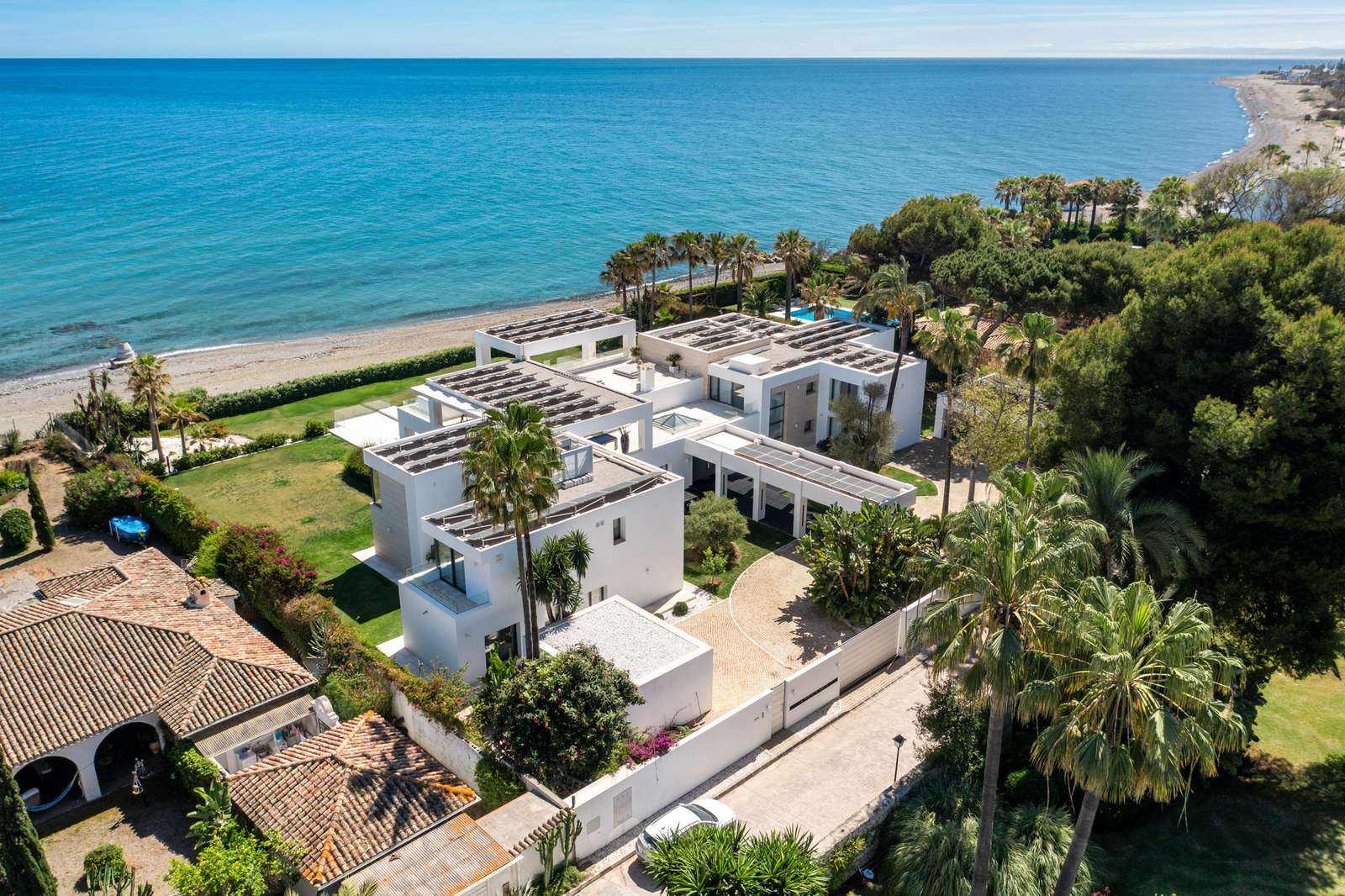
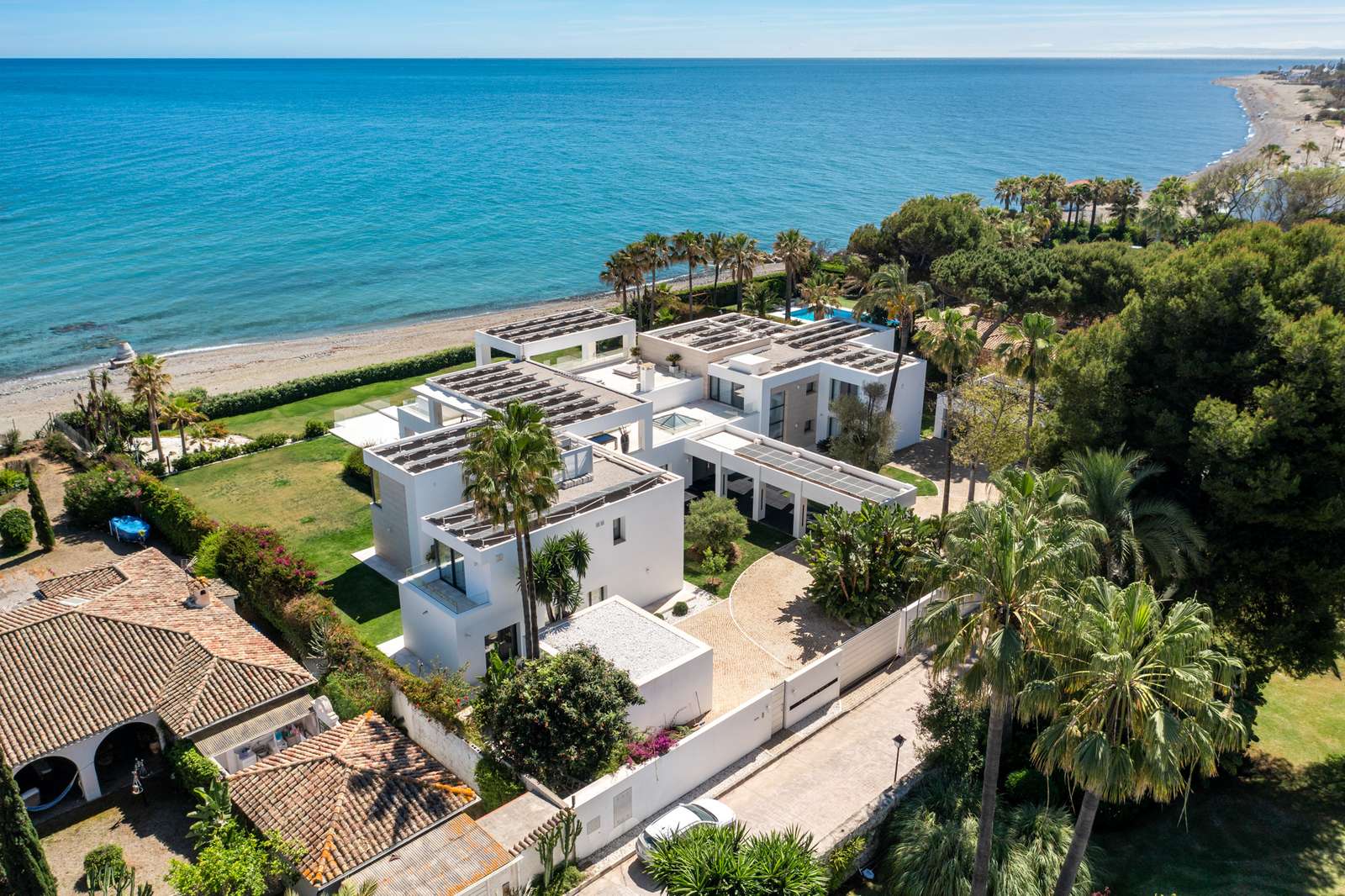
There is a particular quality to the light on the Costa del Sol - soft and buttery in the early morning, blazing white at noon, then melting into that long, forgiving golden hour that makes everyone look like a film star. This is a coast that has been synonymous with glamour since the 1950s, when European aristocrats and Hollywood exiles discovered a sleepy Andalusian fishing town called Marbella and never quite left. What surprises first-time visitors is how effortlessly the two worlds coexist: superyachts glinting in Puerto Banús, and a hundred metres away, a fisherman turning sardines on a skewer over olive-wood embers, as his grandfather did.
Marbella's Beaches: Twenty-Seven Kilometres of Golden Shoreline
Marbella's coastline unspools for some twenty-seven kilometres, and it changes character as you travel along it. To the east, towards Cabopino and the dunes of Artola, the shore breaks into sheltered coves backed by protected pine and juniper - quieter, wilder, with soft sand that squeaks underfoot and a boardwalk threading through the dunes. Families and locals claim these beaches early; by ten in the morning, parasols have bloomed like poppies.
West of the centre, towards Puerto Banús, the beaches stretch long and generous: Playa de Nagüeles, Río Verde, Puerto Banús itself. Here the sand is groomed, the sunbeds are draped in white linen, and the soundtrack shifts from children's laughter to a low, tasteful house beat drifting from the beach clubs. If you want the best of both, walk the senda litoral - the coastal path now linking much of the shoreline - and simply choose your mood as you go.
Chiringuito Culture and the Ritual of the Espeto
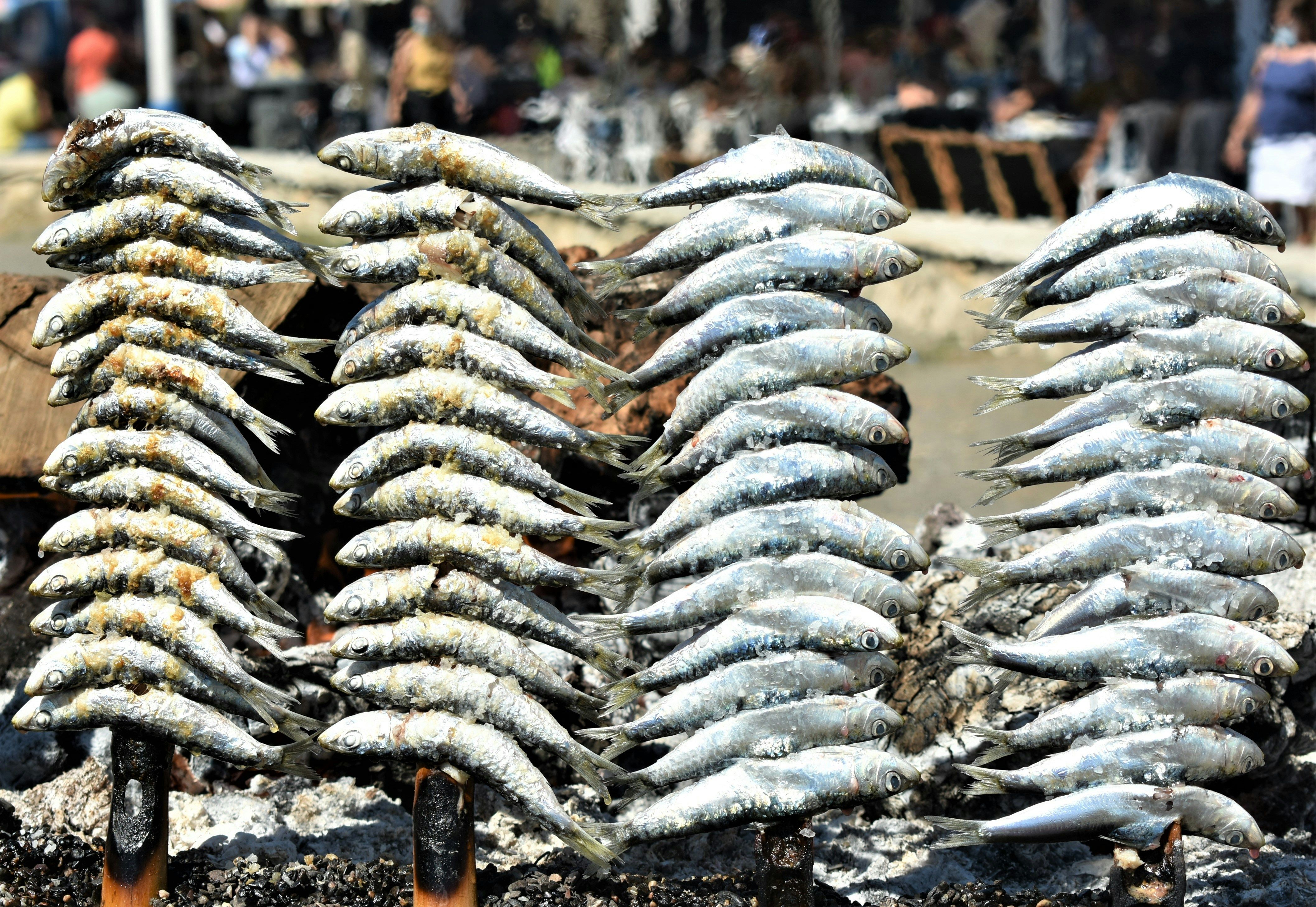
No Costa del Sol day is complete without a chiringuito - the beach shack elevated, in this part of Spain, to something close to an institution. Plastic chairs or designer daybeds, it hardly matters: what matters is the boat hauled up on the sand, filled with sand and glowing olive-wood embers, and the espeto de sardinas - six fat sardines threaded onto a cane skewer, salted, and angled over the fire until the skin blisters and the flesh turns sweet and smoky.
Eat them with your fingers, with a wedge of lemon, cold beer or a chilled glass of Verdejo, and a plate of fried green peppers. The rule, locals will tell you, is that sardines are at their best in the months without an 'r' - May through August, when they are plump with fat. Order at the counter, don't rush, and expect lunch to dissolve gently into late afternoon.
The Golden Mile and Puerto Banús
The Golden Mile is the storied stretch of coast running west from Marbella town towards Puerto Banús: a corridor of walled estates, palm-lined avenues, grand hotels and gates that hint at what lies behind them. At its western end sits Puerto Banús, the marina built in 1970 that still functions as the coast's shop window - a horseshoe of white buildings framing a forest of masts, with Ferraris idling along the quay and boutiques bearing every name you would expect on Avenue Montaigne.
It is theatrical, and gloriously unembarrassed about it. The trick is to treat it as spectacle rather than shopping list. Arrive around seven in the evening, when the light softens and the yacht crews are hosing down the decks. Walk the length of the marina, admire the boats, then take a table at a café on the outer ring rather than the front row, where a glass of cava and a plate of Iberian ham costs a fraction of the price and the view is nearly identical.
Beach Clubs Without the Bill Shock
Marbella's beach clubs - from the long-established institutions of the Golden Mile to the newer arrivals towards Estepona - are genuinely lovely places to spend a day, and there are ways to do them well.
Go midweek: Sunday brunch service is the most expensive and most crowded slot of the week. Tuesday to Thursday, the same sunbed can cost half as much.
Book the daybed, skip the magnum: Sunbed minimum spends are usually reasonable and can be absorbed entirely by lunch. It is the bottle service that inflates a bill into legend.
Come for the shift change: Late afternoon, after the lunch crowd thins and before the DJ turns up the volume, is the loveliest hour - cheaper, quieter, and with the best light on the water.
Remember the public beaches: Every stretch of Spanish coast is public. Bring a towel, walk fifty metres along the sand, and the sea is exactly the same temperature.
Marbella's Old Town: The Casco Antiguo
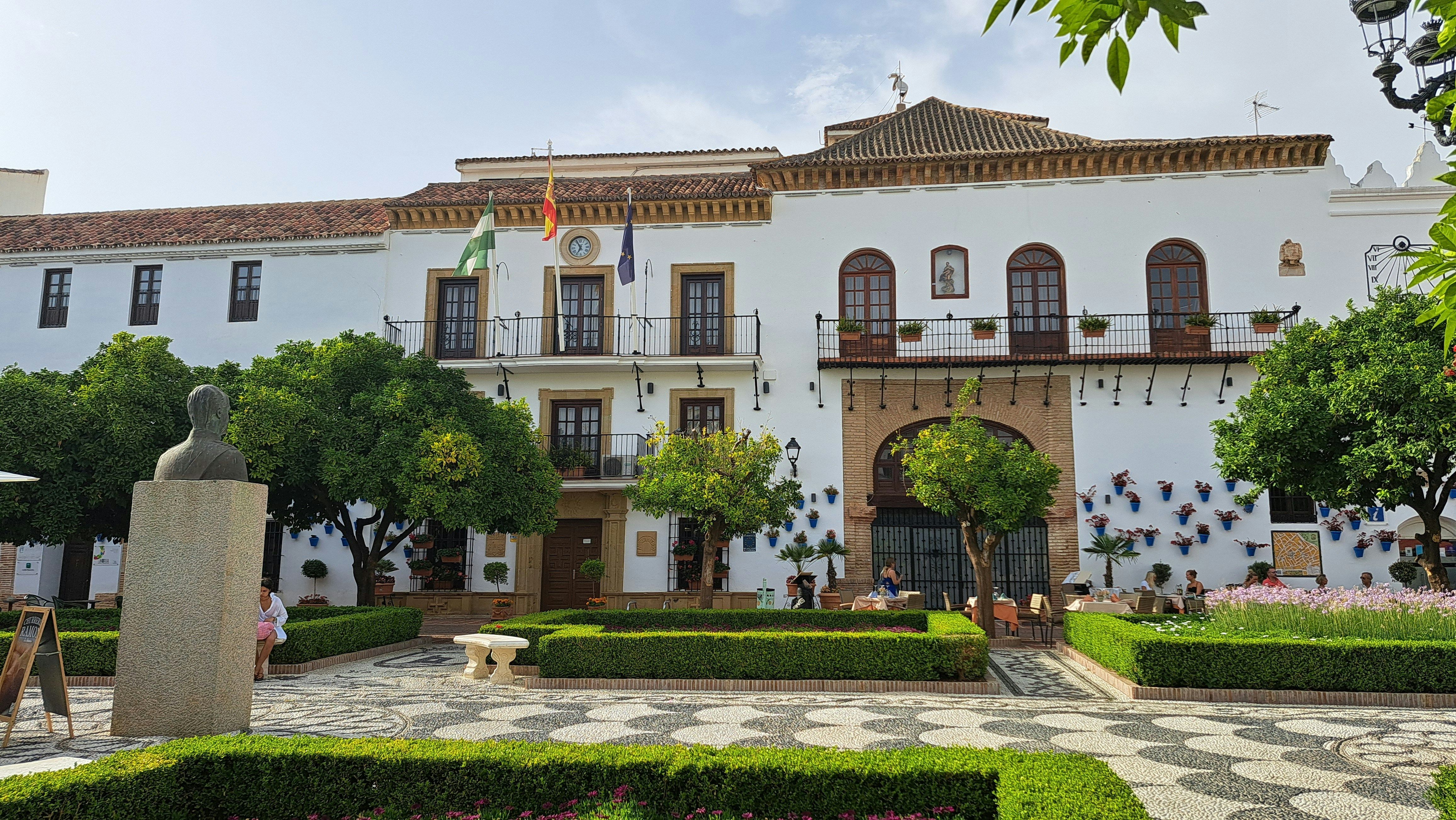
Step inland from the promenade and Marbella performs a quiet magic trick. The Casco Antiguo is a knot of whitewashed lanes barely wide enough for two people to pass, hung with cascading geraniums and bougainvillea, cobbles worn smooth by centuries of feet. At its heart lies the Plaza de los Naranjos, a Renaissance square laid out in the 1480s and planted with orange trees that perfume the whole space in spring, when the blossom comes.
Fragments of the old Moorish walls and the ruined castle still lace through the neighbourhood, reminders that Marbella was Marbil-la long before it was a resort. Wander without a map: you will find the church of Santa María de la Encarnación, tiny plazas with a single café, artisan workshops, and tapas bars where the local vermouth comes over ice with an olive and a strip of orange peel. Come at dusk, when the stone gives back the day's heat and the swallows are wheeling overhead.
Beyond Marbella: The Wider Costa del Sol
Marbella is the headline, but the coast either side rewards the curious traveller - and a hire car turns the whole province into a series of day trips.
Estepona, twenty-five minutes west, has quietly become the coast's most charming town. Its old quarter is a living gallery of flower-filled streets, where residents compete to fill their alleys with painted ceramic pots, and a series of vast murals has turned blank apartment walls into public art. The seafront paseo is long, breezy and blissfully unpretentious.
Fuengirola and Benalmádena, to the east, are where Spanish families holiday: broad beaches, waterparks, a hilltop cable car with views clear to Africa on a good day, and Benalmádena's pretty marina. Not glamorous, entirely joyful.
Málaga, forty minutes along, has undergone one of Europe's great urban reinventions. Picasso's birthplace now holds a museum bearing his name, alongside outposts of the Centre Pompidou and the Carmen Thyssen collection, a Roman theatre, and the Moorish Alcazaba climbing the hill above. Its dining scene - from century-old wine bars pouring sweet Moscatel from the barrel to ambitious modern kitchens - is the best on the coast.
Nerja, an hour east, marks the point where the mountains crowd the sea. Its Balcón de Europa juts out over the water like the prow of a ship, and the coves below - Burriana, Maro, Calahonda - are among Andalusia's prettiest swimming spots.
Into the Hills: White Villages and Mountain Air
What many visitors never realise is how quickly the coast gives way to genuine mountains. Drive twenty minutes inland from Fuengirola and you reach Mijas Pueblo, a whitewashed village clinging to the hillside at 430 metres, with jasmine-scented lanes, a hermitage carved from rock, and a terrace view that takes in the entire sweep of the Mediterranean.
Push further, up through cork oak and chestnut forest, and you reach Ronda - perhaps the most dramatically sited town in Spain, split in two by the El Tajo gorge and stitched back together by the great Puente Nuevo. It holds one of the country's oldest bullrings, Moorish baths, and cliff-edge gardens where the swifts scream past below you. In autumn, the chestnut woods of the Genal Valley turn copper and gold; the drive alone justifies the day.
Elsewhere in the hills: Casares, tumbling down its ridge beneath a Moorish castle; Gaucín, long a favourite of artists and writers; and Istán, above the Concepción reservoir, where the water is turquoise and the air smells of wild rosemary. Bring layers - the mountains are always ten degrees cooler than the beach, which in August is a mercy rather than an inconvenience.
Food and Drink: Long Lunches and Local Wines
Andalusian cooking on this coast is a study in restraint: excellent raw materials, treated simply. Start with pescaíto frito - a paper cone or platter of tiny fish dusted in chickpea flour and flash-fried in olive oil so hot the coating shatters. Anchovies, red mullet, baby squid, whitebait; salt, lemon, nothing else.
In high summer, look for ajoblanco, the pale, almond-and-garlic ancestor of gazpacho, served ice-cold with sweet muscat grapes floating on top - a dish of quiet genius. Then there is gazpachuelo malagueño, a warm, comforting emulsion of fish broth and mayonnaise that few tourists ever try; berenjenas con miel de caña, aubergine fried crisp and drizzled with cane molasses; and boquerones en vinagre, silvery anchovies cured in vinegar and garlic.
To drink, look local. Málaga's wine history stretches back to the Phoenicians, and the region's sweet Moscatel and Pedro Ximénez wines are extraordinary - poured from wooden barrels in old-school bodegas in Málaga city. But the modern renaissance is in dry whites and reds from the high vineyards of the Serranía de Ronda and the Axarquía, where mountain altitude gives the wines a freshness you would not expect from such a hot latitude. And sherry, from neighbouring Cádiz province, remains the perfect partner to fried fish: a chilled glass of Manzanilla or Fino, bone-dry and faintly saline, tastes of the sea itself.
When to Go and How to Do It Well
Best time to visit: The shoulder seasons are the coast's open secret. May and June bring warm sea, long days, jacaranda in bloom and hotel rates well below peak. September and October are arguably better still - the Mediterranean holds its summer heat into November, the crowds have gone, and the light turns amber. July and August are hot, busy and brilliantly alive; winter is mild, green and wonderful for golf, walking and the mountain villages.
Getting there: Málaga-Costa del Sol Airport is one of Europe's best-connected, with direct flights from almost every major city. Marbella is a straightforward 40-minute transfer; Estepona around an hour. The AVE high-speed train also links Málaga to Madrid in under three hours.
Getting around: A hire car unlocks the hill villages and the quieter coves, and the A-7 coastal road plus the AP-7 toll motorway make distances short. Along the eastern coast, the C-1 Cercanías train runs from the airport through Torremolinos, Benalmádena and Fuengirola - cheap, frequent and ideal for a day out. West of Fuengirola there is no rail line, so plan on car, taxi or the reliable coastal bus network.
Where to base yourself: Choose Marbella's Golden Mile or Puerto Banús for glamour, beach clubs and nightlife within walking distance. Choose the eastern coves around Cabopino and Elviria for family-friendly calm and easy beach access. Choose Estepona or the hills above Benahavís for privacy, views and villa living, with the coast twenty minutes below. Choose Málaga city if culture, museums and serious eating are your priority.
The Long Goodbye
What lingers about this coast is not the yachts or the boutiques, pleasant as they are. It is the smell of wood smoke and salt on an evening breeze; the particular blue of the Mediterranean seen through a fringe of pine; the sound of a village square at nine in the evening, when the whole town has come out to talk. Marbella and the Costa del Sol offer that rarest of holiday equations - glamour available on demand, and simplicity always within reach.
The sea is warm from May to November. The sardines are on the fire. All that remains is to choose your window and your view.
Explore our villas in Marbella & the Costa del Sol